
Destination guide
Discover Mount Kenya National Park
Use this guide to understand the landscape, wildlife, activities and practical details before adding the destination to your safari route.
Mount Kenya National Park safari and trekking guide
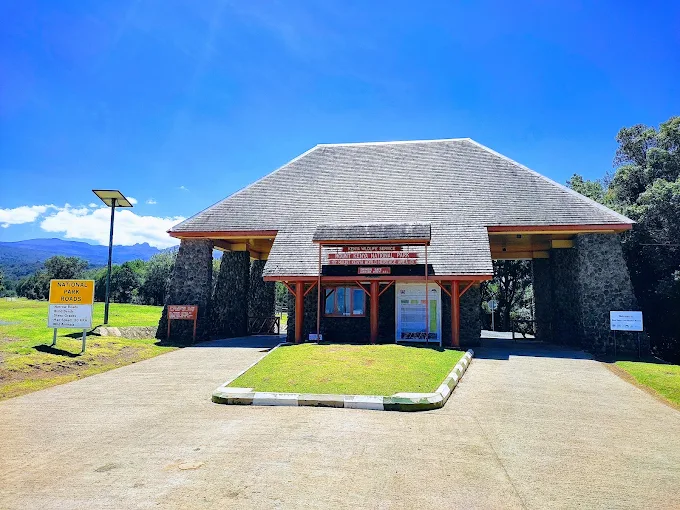
Mount Kenya National Park adds altitude, forest and alpine scenery to a Kenya itinerary dominated by savannah wildlife. Mount Kenya rises to 5,199 metres, making it Africa’s second-highest mountain. The national park and surrounding natural forest are internationally recognised for exceptional landscapes and ecological processes. Forested lower slopes, bamboo, moorland, glacial valleys and rocky high peaks create a sequence of habitats that changes dramatically with elevation.
Most safari travellers do not need to attempt the summit to appreciate the mountain. Shorter hikes and guided walks can be arranged from suitable access points, while serious trekkers may choose multi-day routes requiring dedicated planning, equipment and acclimatisation. In a mixed wildlife-and-outdoor itinerary, a full day near the mountain provides a valuable contrast to long vehicle-based game drives.
Landscape and altitude
Mount Kenya is an ancient extinct volcano whose upper landscape was shaped by glaciation. Rugged peaks, glacial valleys, tarns and remaining glaciers characterise the higher mountain. Vegetation changes with altitude from forest and bamboo into heath, moorland and Afro-alpine communities. Even a moderate hike can therefore reveal a rapid change in scenery over a relatively short vertical distance.
Wildlife and ecological connections
The broader ecosystem supports wildlife in lower forests and foothills, and important wildlife corridors connect the mountain with wider Laikipia conservation landscapes. Mammals in the wider ecosystem include elephants and a variety of forest species, while birdlife changes with altitude and habitat. A mountain day should not be marketed as a conventional big-game drive; its strengths are scenery, walking, ecology and altitude.
Trekking and day-walk options
Mount Kenya has several well-known approaches, including routes from the Nanyuki side. The appropriate route depends on available time, fitness, weather and whether the objective is a scenic walk, Point Lenana or technical climbing. Intna only schedules activities that can be supported by suitable guides and realistic timing. Technical summit climbing requires specialist arrangements beyond an ordinary safari package.
Combining the mountain with a safari
A practical longer route can travel from Samburu National Reserve to Nanyuki, then spend a day on a Mount Kenya activity before continuing toward Lake Nakuru and the Masai Mara. This breaks up long road travel and introduces walking, altitude and highland ecology before returning to wildlife-focused destinations.
Mountain safety and responsible travel
Weather can change rapidly. Visitors should carry layers, rain protection, drinking water, sun protection and appropriate footwear even on shorter walks. Altitude can affect people differently, and anyone feeling unwell should tell the guide immediately. Staying on designated trails reduces erosion and protects fragile vegetation. Litter should be carried out and wildlife never approached or fed.
Who should include Mount Kenya?
Mount Kenya is ideal for travellers who want more than vehicle-based safari experiences. Hikers, landscape photographers, birders and active families can all benefit from the change of pace, provided the chosen activity matches fitness and age. The mountain also works well for repeat Kenya visitors looking for a deeper sense of the country’s ecological range.
Planning Mount Kenya National Park with Intna
Intna plans Mount Kenya National Park as part of a complete journey rather than as an isolated name on a route. Final timing is checked against realistic driving distances, current access, weather, accommodation availability and the interests of the travelling party. Guests should share mobility needs, dietary requirements, photography goals and preferred pace before the quotation is confirmed. This allows the itinerary to be adjusted sensibly while preserving enough time to experience the destination without turning it into a rushed transit stop. Operational information is checked again close to travel because road conditions, protected-area procedures, local activity schedules and supplier availability can change. Wildlife remains free-ranging and individual sightings cannot be guaranteed.
Why visit
Highlights of Mount Kenya National Park
- Africa’s second-highest mountain at 5,199 metres
- UNESCO World Heritage landscape
- Montane forest and Afro-alpine ecosystems
- Day hikes and multi-day trekking routes
- Glacial valleys, tarns and rugged peaks
- Wildlife corridors linking mountain and Laikipia
Location & route planning
Where is Mount Kenya National Park?
Use the map to understand where this destination sits and how it can connect with the rest of your safari.